
New Build Inspections in Alberta
Buying new doesn't mean buying without defects — it means buying with a warranty. Three independent inspections turn the Alberta New Home Warranty into something the builder will actually act on: pre-board (before drywall hides the structure), pre-possession (before keys change hands), and the 11-month inspection (before year-one workmanship coverage expires).
The Alberta New Home Warranty
Since 2014, every new home built in Alberta is covered by mandatory new home warranty. The schedule is fixed across all approved providers (Travelers, Progressive, ANHWP, WBI, Pacific Home Warranty):
- 1 year on workmanship and materials — covers defects in finishes, cabinetry, paint, flooring, trim, fixtures and labour.
- 2 years on delivery and distribution systems — plumbing, electrical, heating, ventilation systems and exterior cladding installation.
- 5 years on building envelope — roof, exterior walls, windows, doors, weather barriers and water penetration.
- 10 years on structural — load-bearing elements, foundation, roof structure.
The warranty is the builder's obligation. The provider only steps in if the builder fails. Every claim must be reported in writing to both the builder and the provider before its coverage window expires.
Pre-board (pre-drywall) inspection
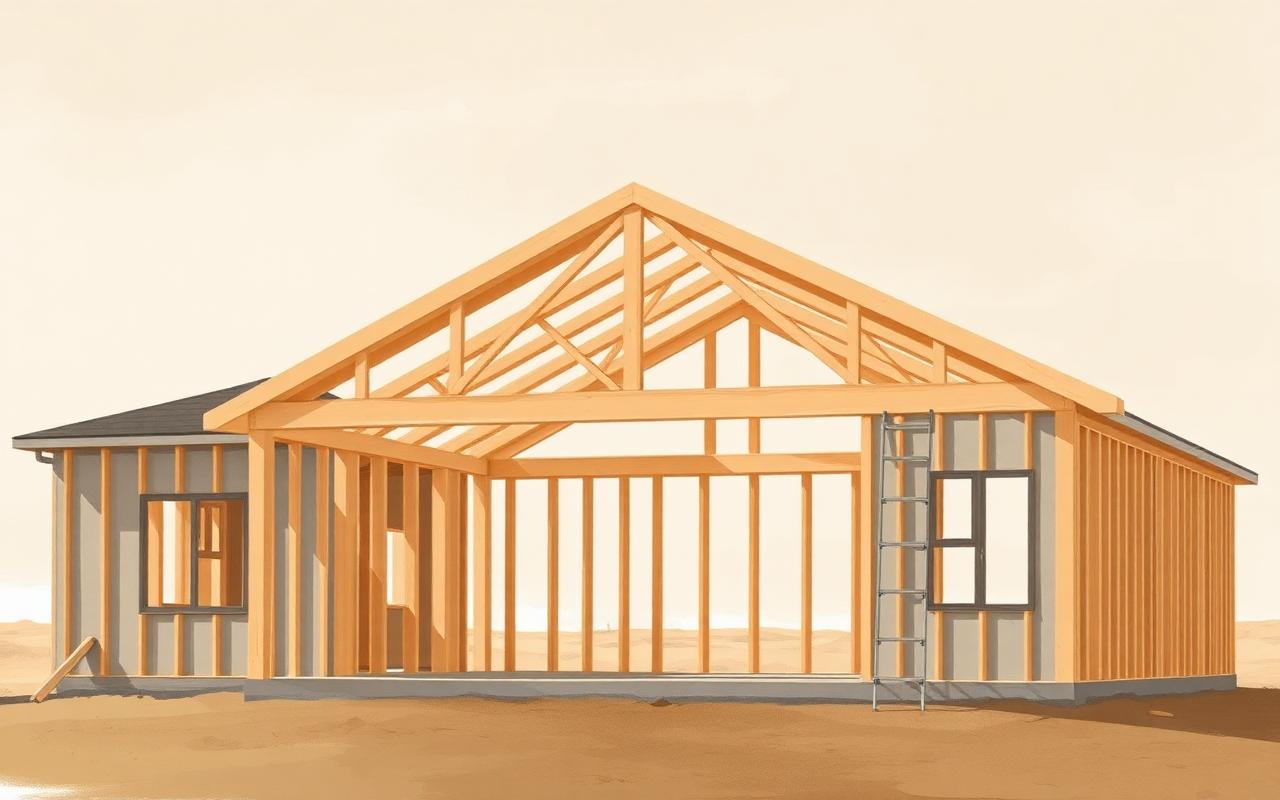
Pre-board happens after framing, rough-in plumbing, electrical and insulation are complete but before drywall closes the walls. It is the only chance to see the structure of the home you're buying. Once drywall is up, framing defects, missing fire blocking, plumbing routing errors and insulation gaps are hidden until they cause symptoms years later.
- Framing alignment, header sizing, point loads, blocking under bearing walls.
- Plumbing supply line routing, drain slope, vent stack tie-ins.
- Electrical box positioning, wire stapling, panel grounding.
- Insulation coverage, vapour barrier continuity, sealed penetrations.
- Window and door rough opening flashing.
Pre-possession inspection
Pre-possession (sometimes called the third-party PDI) happens after the builder's own walkthrough but before key handover. It produces a deficiency list that gets added to the builder's pre-occupancy schedule. The advantage of an independent third-party inspection: the inspector reports to you, not the builder, and catches the items a builder representative tends to skim.
- Finish quality — drywall, paint, trim, cabinetry, flooring transitions.
- Mechanical commissioning — furnace settings, HRV balancing, hot water tank install.
- Exterior — grading, downspout discharge, deck attachment, weep holes, kick-out flashings.
- Attic — insulation depth, ventilation balance, hatch insulation, exhaust fan termination.
- Window and door operation, weather seals, lock function.
The 11-month warranty inspection
Book the 11-month inspection roughly four to six weeks before your possession anniversary. The goal is a written deficiency list submitted to your builder and warranty provider before year-one workmanship coverage expires. After the deadline, the same items become out-of-warranty repairs at your cost.
- Drywall cracks at corners, beams, and stair openings (settlement is normal; document it).
- Door alignment, latch issues, weather-strip gaps developed over the first year.
- Caulking failures around tubs, sinks, exterior penetrations.
- Grading settlement against the foundation, downspout extensions, sod settlement.
- Deck post anchoring, ledger flashing, railing function.
- Mechanical — furnace performance, HRV operation, hot water tank function.
Common new-build defects in Calgary
- Attic insulation compressed, missing at hatches, blocked at eaves — Calgary attic rain develops within a winter or two.
- HRV installed but never commissioned — fan speeds unset, balancing dampers untouched, controls not configured.
- Kick-out flashings missing where roof meets sidewall — wall rot starts immediately and isn't visible until siding is removed.
- Caulking applied over uncleaned siding — lifts within a winter.
- Furnace size oversized for the home — short cycling, humidity issues, premature wear.
- Grading sloping toward the foundation — lot settlement plus sod direction.
- Builder PDI 'completed' deficiency lists with items still outstanding at possession.
Filing a warranty claim
- Document each item with photos and the inspector's report.
- Submit the list in writing to your builder, copying your warranty provider — email is fine, but keep proof of receipt.
- Give the builder a reasonable response window (usually 15–30 days) before escalating to the warranty provider.
- If the builder disputes coverage, the warranty provider will adjudicate — the inspector's written report is the primary evidence.
- Track all repairs to completion in writing — partial fixes that drag past the deadline can be challenged.
Related services
Related guides
Service areas
Frequently Asked Questions
- Do I really need an inspection on a brand new home? +
- Yes. New-home defects are routine — the question is whether they're caught while the builder is responsible or after warranty coverage expires.
- When should I book the 11-month inspection? +
- About 10 to 11 months after possession, leaving four to six weeks to deliver the report and a written claim before the one-year workmanship deadline.
- Will the builder push back on a third-party inspector? +
- Some do. Builders are required to permit warranty-related inspections, and the report is what supports any later warranty provider escalation.
- Is a pre-board inspection worth it on a single-family home? +
- Yes — especially on multi-storey homes, custom builds, and any home with complex framing or basement development.
- What does a pre-possession inspection cost? +
- Typically $400–$650 in Calgary, similar to a standard pre-purchase inspection.
- What if my builder won't fix a documented warranty item? +
- Escalate to the warranty provider with the written claim and inspector's report. The provider's role is exactly that — backstop when the builder fails to perform.
- Does the warranty transfer if I sell within the coverage period? +
- Yes — the warranty runs with the home, not the original buyer, for the full coverage period.
- Can I do my own 11-month inspection? +
- You can document obvious items, but builders and warranty providers respond more decisively to a third-party report from a certified inspector.
More guides
- Buying a Home in Calgary: The Inspection-Led Guide
A working Calgary home inspector's complete guide to buying a home — what to look for in every era and neighbourhood, how to use the inspection condition, common defects by housing type, and how to negotiate after the report.
- Selling a Home in Calgary: Pre-Listing Inspection Strategy
How a pre-listing home inspection changes a Calgary sale — what to fix, what to disclose, what to leave for the buyer's inspector, and how to use the report to defend price.
- Calgary Housing Stock by Era: Defects by Decade
A decade-by-decade reference for Calgary home buyers and homeowners — common defects, plumbing types, wiring, insulation, and inspection findings from 1950s bungalows to today's new builds.
- What Does a Calgary Home Inspection Include — And What Does It Not Include?
A Calgary home inspector explains exactly what a standard home inspection covers, what's conditionally included, what's outside scope, and how to use the report.
- Calgary Home Inspection Cost: What Changes the Price and What's Worth Paying For
What a Calgary home inspection actually costs in 2026, the property factors that move the price, why the cheapest quote is rarely the best, and what to ask before you book.
- Home Inspection Before Waiving Conditions in Calgary: Buyer Decision Guide
How to use the home inspection condition window in a Calgary purchase — separating major defects from maintenance, deciding when to renegotiate, and what to do under deadline pressure.
- New Build Inspection in Calgary: PDI, Possession, and Warranty Strategy
How a Calgary new build inspection differs from the builder PDI, when to schedule each, and how independent inspections protect your warranty documentation.
- The 25 Most Common Calgary Home Inspection Issues Buyers and Sellers See
A working Calgary inspector's list of the most common defects we report — hail roof wear, attic frost, grading, basement moisture, Poly-B, aluminum wiring, and more.
- Attic Frost, Ventilation, and Insulation in Calgary Homes: What It Really Means
Why attic frost shows up in Calgary winter inspections, what causes it, when it's serious, and how to fix the underlying ventilation and insulation problems.
- Poly-B, Aluminum Wiring, and Older Calgary Homes: What Buyers Need to Know
How to identify Poly-B plumbing and aluminum branch wiring in Calgary homes, what insurers and buyers actually care about, and how to handle the findings before condition removal.
- Pre-Listing Inspection Strategy for Calgary Sellers: Fix, Disclose, Price, or Leave Alone
How Calgary sellers should use a pre-listing inspection — what to fix, what to disclose, what to price into the listing, and what to leave alone.
- Calgary Condo Inspection Guide: Unit Inspection, Condo Documents, and Building Envelope
What a Calgary condo inspection covers and what it doesn't — the unit, the building envelope, common property, and the document review every condo buyer needs.
- Flipped & Renovated Calgary Home Inspection Red Flags
Renovated and flipped homes look great in photos — but the inspection often tells a different story. The red flags Calgary buyers should look for, inside and out.
- How to Prioritize Home Inspection Findings Without Overreacting
A calm, deal-aware framework for sorting Calgary home inspection findings into safety, major repair, further evaluation, maintenance, monitoring, and normal homeownership categories.
- Normal Wear and Tear vs a Defect in a Home Inspection
How a Calgary home inspector tells the difference between normal age-related wear and a real defect — with examples for roofs, furnaces, caulking, grading, windows, and decks.
- How to Use a Home Inspection in Negotiations Without Killing the Deal
A neutral, deal-aware Calgary guide to using inspection findings in negotiation — what's worth raising, what's better left alone, and how realtors keep the conversation constructive.
- When a Home Inspector Recommends a Specialist: What It Really Means
What 'further evaluation' actually means in a Calgary home inspection report — when an electrician, plumber, roofer, HVAC tech, structural engineer, sewer scope or radon test belongs in the picture.
- Why Calgary's Climate Changes How Home Inspections Should Be Read
Freeze-thaw, hail, attic frost, spring melt, dry chinooks and clay soils — how Calgary's climate creates context every buyer, seller and relocation buyer should understand before reading an inspection report.
- What a Home Inspection Cannot See — And Why That Does Not Make It Useless
An honest, scope-aware look at what a Calgary home inspection cannot see, why limitations are part of a responsible inspection, and how thermal imaging, sewer scopes, and add-ons reduce uncertainty.
- Calgary Home Inspections for Renovated Homes: What Buyers Should Understand
How to inspect a renovated or flipped Calgary home without anti-flip bias — workmanship clues, system updates vs cosmetic updates, permit and documentation questions, and when a specialist follow-up makes sense.
- Inspection Findings Sellers Can Document Before Listing
A practical Calgary seller guide to documenting maintenance, repairs, major-system age, warranties, permits and known conditions — reducing buyer uncertainty without overselling the home.
- Condo Inspection vs Condo Document Review in Calgary: Why You Usually Need Both
Calgary condo buyers often confuse a unit inspection with a condo document review. They answer different questions — and most buyers benefit from both.
- A Realtor's Guide to Keeping Home Inspection Conversations Calm and Useful
A practical communication guide for Calgary buyer agents and listing agents — setting expectations, managing inspection day, separating priorities, and using inspection findings to keep deals together.
- Roof Age vs Roof Condition in a Calgary Home Inspection
Roof age matters, but it's not the whole story. How a Calgary home inspector reads visible shingle condition, flashing, drainage, ventilation and past repairs — and what that means for buyers and sellers.
- Furnace Age vs Performance in a Calgary Home Inspection
Furnace age is one clue; performance, service history, venting, airflow and combustion-air observations matter just as much. How to read furnace findings in a Calgary inspection report calmly.
- Water Heater Age in a Home Inspection: Planning Item or Urgent Concern?
Water heater age is usually a planning item, not an emergency, unless visible leaks, unsafe venting, corrosion or installation concerns are present. How to read water heater findings in your Calgary inspection report.
- Minor Grading Issues in Calgary Home Inspections: What They Mean in Context
Minor grading issues mean the soil may not be moving water away from the foundation as well as it should. How a Calgary home inspector reads grading findings — and what's a quick fix vs a deeper concern.
- Moisture Stains in a Home Inspection: Old, Active, or Worth Watching?
A moisture stain doesn't automatically mean an active leak. How a Calgary home inspector reads basement, attic, ceiling, window and plumbing-area staining — and what next steps actually look like.
- Electrical Panel Findings in a Home Inspection: What Buyers Should Understand
Electrical panel findings deserve attention, but the meaning depends on the issue. How a Calgary home inspector reads panel observations, what defers to an electrician, and what's typical for older homes.
- Plumbing Materials in Calgary Home Inspections: Age, Risk, and Context
Poly-B, copper, PEX, galvanized, cast iron — what each plumbing material means in a Calgary home inspection report, and how to read material findings without panic.
- Basement Development Inspection in Calgary: What Buyers and Sellers Should Know
A developed basement adds usable space — but inspection context matters. How a Calgary home inspector reads moisture, egress, electrical, plumbing and workmanship clues in finished basements.
- Inspection Findings vs Repair Estimates: Why They Are Not the Same Thing
A home inspection finding identifies a visible condition. A repair estimate prices a defined scope of work. Why Calgary inspectors stop short of pricing — and how to use trade quotes during conditions.
- Home Inspection Findings in Older Calgary Homes: Context for Buyers and Sellers
Older Calgary homes — Mount Pleasant, Inglewood, Hillhurst, Mission — often have age-related findings, past renovations and documentation gaps. How to read those findings without unfairly discounting character homes.
- What to Expect on Home Inspection Day in Calgary
On home inspection day, buyers should expect a visual, non-invasive review of readily accessible systems, a walkthrough of key findings where possible, and...
- How Long Does a Home Inspection Take in Calgary?
A Calgary home inspection often takes a few hours, but timing depends on property size, age, complexity, access, weather, add-on services, and how many que...
- Home Inspection Condition Deadlines in Calgary: How Buyers Can Stay Organized
A home inspection condition deadline creates a short window to book the inspection, attend or review findings, ask follow-up questions, and decide whether ...
- Home Inspection Guide for First-Time Buyers in Calgary
A home inspection helps first-time buyers understand the visible condition of a property, how major systems work, what maintenance may be coming, and which...
- Home Inspections for Relocation Buyers Moving to Calgary
Relocation buyers can use a Calgary home inspection to understand local climate issues, property age differences, seasonal limitations, system condition, a...
- Home Inspections for Estate Sales in Calgary: What Buyers and Sellers Should Know
An estate-sale inspection can help buyers and sellers understand visible condition when maintenance history, documentation, or recent occupancy details may...
- Calgary Infill Home Inspections: Newer Does Not Mean No Questions
A Calgary infill inspection helps buyers understand visible workmanship, grading, drainage, roof and exterior details, mechanical systems, basement develop...
- Acreage Home Inspections Near Calgary: What Changes Outside the City
An acreage inspection can include the home itself, but buyers should also understand rural systems, outbuildings, site drainage, wells, septic, utilities, ...
- Luxury Home Inspections in Calgary: More Systems, More Context
A luxury home inspection often involves more systems, more finished space, more custom details, and more documentation questions. The goal is not to find r...
- Home Inspection Before Renovating in Calgary: What Owners Can Learn First
A pre-renovation inspection can help owners understand visible condition, moisture clues, electrical and plumbing concerns, attic and ventilation issues, a...
- Buying a Home With Past Basement Water History in Calgary
Past basement water history does not automatically mean a home should be avoided. Buyers should understand what happened, whether the source was addressed,...
- Smoke and Carbon Monoxide Alarms in Calgary Home Inspections
Smoke and carbon monoxide alarm findings are often practical safety and maintenance items. Inspectors may note missing, outdated, inaccessible, or improper...
- Stucco and Exterior Cracks in Calgary Home Inspections
Stucco/exterior cracks are common, visible, and often misunderstood. Strong Calgary relevance with infills and newer homes.
- Siding and Exterior Maintenance Findings in Calgary Home Inspections
Exterior maintenance is common and can be explained constructively. Strong seller prep and homeowner maintenance angle.
- Plumbing Leak or Condensation? How Home Inspectors Think About Moisture Clues
Moisture source confusion is common and highly searched. This page helps clarify without overclaiming.
- Sloping Floors in a Home Inspection: What Buyers Should Understand
Sloping floors are anxiety-inducing but context-dependent. Excellent for AEO and older-home buyer education.
- Cracks in Walls and Ceilings During a Home Inspection
Interior cracks are common and require nuance. This can rank for broad crack/report questions.
- Townhouse Home Inspections in Calgary: Unit, Exterior, and Shared Responsibility Context
Townhouse inspections have unique ownership and responsibility questions. Strong condo/townhouse search opportunity.
- Duplex and Semi-Detached Home Inspections in Calgary
Duplex/semi-detached properties have distinct shared-wall, roof, exterior, utility, suite, and ownership questions. Strong local real estate relevance.
- Pre-Listing Inspection vs Buyer Inspection in Calgary
Direct commercial comparison page that can route users into seller or buyer services.
- Buying an As-Is Home in Calgary: Why an Inspection Still Matters
A practical Calgary buyer guide explaining why an inspection still matters for as-is homes, estate sales, rentals, and investor properties.
- What a Calgary Home Inspection Cannot See — And Why That Does Not Make It Useless
A deep Calgary buyer and seller guide to what a home inspection cannot see, what those limits actually mean, and how to use the report anyway.
- Attic Frost vs Roof Leak in Calgary Homes: How Inspectors Think About the Clues
How Calgary inspectors think about attic frost versus roof leak clues — location, pattern, ventilation, fan discharge, and what each may mean.
- Do You Need a Sewer Scope With a Calgary Home Inspection?
A deep Calgary buyer guide explaining when a sewer scope may make sense, what a standard inspection does not include, and how to decide calmly.
- How to Read a Calgary Home Inspection Report Without Getting Overwhelmed
A deep Calgary buyer guide to reading a home inspection report, triaging findings, understanding limitations, and deciding what needs follow-up.
- Thermal Imaging in Calgary Home Inspections: What It Can Find — And What It Cannot
What thermal imaging actually does in a Calgary home inspection, where it helps, where it misleads, and how to read thermal findings without false confidence or false fear.
- Calgary Townhouse Inspection Guide: Unit, Exterior, Shared Walls, and Condo Responsibility
What a Calgary townhouse inspection actually covers — unit systems, shared walls, attached garages, roofs, exteriors, and the document review that goes with it.
- Calgary Home Inspections for Renovated or Flipped Homes: What Buyers Should Understand
A calm Calgary buyer guide to inspecting renovated and flipped homes — workmanship, systems, permits, documentation, and hidden limitations.
Schedule your inspection
Online booking, evening and weekend availability across Calgary and area.