
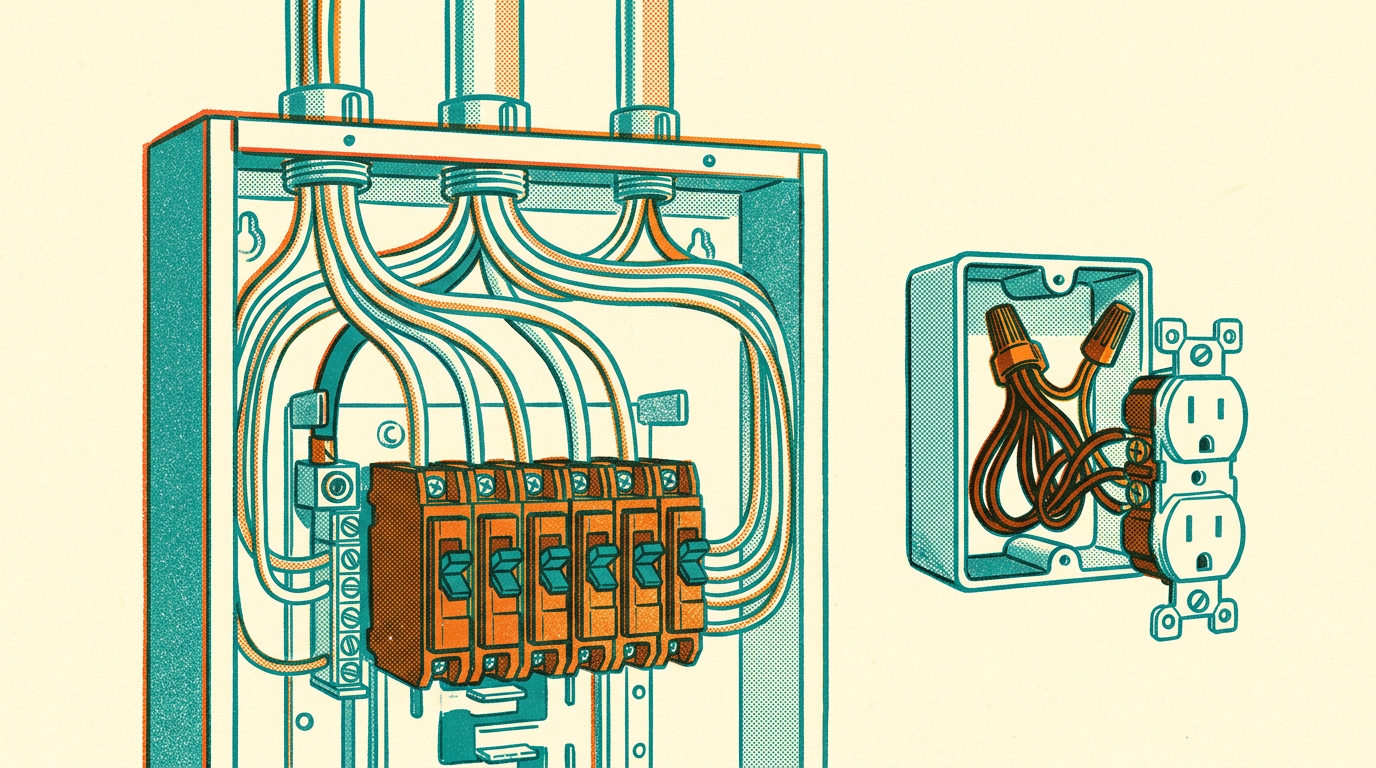
Why aluminum wiring matters in Calgary inspections
Aluminum branch wiring is one of those inspection findings that needs careful language. It should not be written as instant panic, but it should never be brushed off as just an older-home quirk. For Calgary buyers, it can affect insurance, repair quotes, negotiation, renovation plans, permit questions and long-term confidence in the home.
The most useful inspection question is not simply “does the house have aluminum wiring?” It is: where was aluminum branch wiring visible, what devices and terminations were visible, what repairs or upgrades have been documented, what is hidden, and what does the buyer’s insurer require before the buyer removes conditions?
Aluminum wiring comes up most often in mid-century and early-suburban Calgary housing stock. That can include homes from the mid-1960s through late-1970s era, plus properties that were altered during that time. In communities with older bungalows, splits and early two-storeys, the electrical system can tell a bigger story about renovations, additions, panel changes and partial upgrades.
What aluminum branch wiring is — and what it is not
The inspection concern is usually smaller-gauge aluminum branch circuit wiring serving outlets, switches, fixtures and some appliances. This is different from the larger aluminum conductors commonly used in utility distribution, service feeders or larger electrical applications. A home can have aluminum service conductors without having aluminum branch circuits throughout the house.
Safety Codes Council material for Alberta notes that homes constructed between the mid-1960s and late-1970s could have aluminum wiring. It also explains that aluminum is safe when proper connections and terminations are made without damaging the wire and when approved materials are installed in accordance with the Canadian Electrical Code and manufacturer instructions.
That distinction matters. The wire itself is not the only issue. The high-risk areas tend to be terminations and splices: outlets, switches, light fixtures, junction boxes, appliance connections and panel terminations. If aluminum conductors were connected to devices intended only for copper, or if connections loosened, overheated or were poorly altered, the risk becomes more practical and immediate.
What a home inspector can identify visually
A visual home inspection can identify accessible clues. The inspector may see aluminum conductors in the electrical panel, visible branch wiring in an unfinished basement ceiling, accessible attic areas, junction boxes, unfinished utility rooms or exposed cable jackets. Some wiring jackets may have markings such as “AL,” and exposed conductor colour may help distinguish aluminum from copper when visible.
The Safety Codes Council guidance says that if wiring jackets are not accessible, a device may be removed from a de-energized circuit to check wire colour, and silver conductor colour indicates aluminum. That kind of deeper device-level work is not the same as a standard non-invasive home inspection, and it is one reason electrician follow-up is often appropriate.
A home inspector can report visible evidence, panel clues, unsafe-looking splices, missing covers, overheating signs, amateur alterations, mixed wiring, doubled conductors, open junction boxes, buzzing or scorched devices if visible. But the report should not claim that every hidden termination was verified. Most of the risk lives where standard inspections have limited access.
What the inspection should not overclaim
Aluminum wiring is a perfect example of why scope language matters. A home inspector is not there to dismantle every receptacle, test torque on every terminal, open every junction box, verify every connector listing or certify the quality of past repairs. InterNACHI’s aluminum-wiring inspection guidance says inspectors are not required to remove outlet or switch covers and recommends caution even if a cover is removed to observe visible pigtails.
If obvious copper pigtails are seen, that does not automatically prove the entire home was properly remediated. The quality of the splice may not be verified. The connector may not be visible. Only one device may have been checked. Other rooms, fixtures, junction boxes, appliances or panels may still have original aluminum terminations.
Good report language should be specific: “aluminum branch wiring was visible at the panel,” “some copper pigtails were visible at accessible locations,” “repair quality and completeness were not verified,” or “qualified electrician evaluation is recommended.” That protects the buyer from both extremes: panic and false confidence.
Warning signs buyers should not ignore
The Electrical Safety Authority notes that reported aluminum-wiring problems are usually related to overheating and failure at terminations. It lists warning signs such as warm cover plates, discolouration of switches or receptacles, signs of arcing, flickering lights, and the smell of hot plastic insulation.
In a home inspection, visible scorch marks, melted insulation, buzzing outlets, loose receptacles, missing covers, amateur splices, copper-only devices on aluminum conductors, extension-cord-style workarounds, overloaded circuits or unusual panel work should be treated seriously. The right next step is not a handyman repair. It is evaluation and correction by a qualified electrician.
At the same time, absence of obvious scorch marks does not prove the system is fully safe. Some concerns are hidden behind devices, in junction boxes or under covers that are not opened during a standard inspection. That is why a buyer should combine the inspection report with electrician review and insurance confirmation when aluminum branch wiring is present.
Approved devices, pigtails and repair language
Aluminum wiring remediation language can get messy because buyers hear terms like CO/ALR, AL-CU, CU-AL, pigtailing, COPALUM and AlumiConn. The Safety Codes Council guidance lists required markings for devices used with aluminum wiring, including CO/ALR or AL-CU for certain receptacles and CO/ALR for certain switches. It also says push-in terminations shall not be used with aluminum conductors.
The CPSC describes COPALUM pigtailing as a repair method using a special connector to attach a short copper wire to aluminum wire at connection points, and says the repair should include every aluminum-wire connection or splice in the home. The CPSC also recognizes AlumiConn as an alternative repair method where COPALUM is not available, and says the work should be conducted by a qualified electrician.
For a Calgary buyer, the inspection report should avoid pretending that seeing one purple connector or one pigtail answers the whole house. The practical question is completeness: Were all receptacles, switches, fixtures, appliances, junction boxes and panel terminations addressed? Were permits and inspections completed? Is there an electrician report or invoice? Will the insurer accept the documentation?
Insurance and condition-removal timing
Insurance is often the deciding factor. The Electrical Safety Authority notes that many insurers may not provide or renew coverage on homes with aluminum wiring unless the wiring is inspected and repaired or replaced as necessary and inspection documentation is provided. It also notes that some insurers may require replacement with copper wiring.
Even though ESA is Ontario-based, the practical buyer lesson applies in Calgary: call your insurer or broker before condition removal. Do not assume every insurer will treat aluminum branch wiring the same way. Underwriting can depend on repair method, electrician documentation, age of the home, prior claims, panel condition and whether the insurer requires full replacement, pigtailing, CO/ALR devices or an electrician’s letter.
A buyer should ask directly: Will you insure this home with aluminum branch wiring? What documents do you need? Do you require repair before possession? Do you accept pigtailing? Do you require a licensed electrician’s report? Does water damage, fire coverage or deductible structure change? A confident insurance answer is better than hoping the issue will be fine after closing.
Calgary permits and electrician review
The City of Calgary states that an electrical permit is required for all new wiring installations and when extending or altering existing electrical branch circuit wiring. The City also says all electrical installations in new or renovated buildings require electrical permits, and certified electrical contractors applying for contractor permits must hold the appropriate Alberta Master Electrician and City licensing requirements.
For buyers, the permit angle matters because aluminum-wiring repair is not just cosmetic. If past owners completed electrical alterations, basement renovations, suite work, panel changes, added circuits or device replacements, documentation may be relevant. A renovation that looks clean may still have hidden electrical questions if no permit or inspection records exist.
This does not mean every older home is a problem. It means buyers should ask for permits, invoices, inspection stickers, electrician letters and repair scope when aluminum wiring is present or suspected. If documentation is missing, the next step is usually a qualified electrician assessment.
Calgary neighbourhood and era context
In Calgary, aluminum branch wiring questions are most relevant for homes built from the mid-1960s to late-1970s, plus homes renovated during that era. That can include mature bungalow and split-level areas, older suburban communities, and some inner-city properties with additions or older renovations.
Examples where buyers may ask more detailed electrical-era questions include Acadia, Haysboro, Southwood, Fairview, Willow Park, Lake Bonavista, Brentwood, Varsity, Dalhousie, Bowness, Montgomery, Thorncliffe, Huntington Hills, Marlborough, Rundle, Pineridge and similar communities with housing from the relevant time frames. This is not a claim that every home in those areas has aluminum wiring. It is a reminder that era and evidence matter.
Newer homes can still have amateur alterations, basement wiring issues or unpermitted work, but aluminum branch wiring is less likely to be the central question. Older homes can have complete copper rewires or proper remediation. The inspection should be based on what is visible and documented, not neighbourhood assumptions.
What buyers and sellers should do next
Before condition removal, buyers should ask: Was aluminum branch wiring observed? Where? Are there visible signs of overheating? Are devices marked for aluminum use? Are there pigtails? Were repairs done by an electrician? Are permits, inspection records or insurance letters available? Will the buyer’s insurer accept the current condition?
If the answer is unclear, the next step should be electrician review, not guesswork. A quote or written assessment can turn a vague inspection concern into a decision: proceed as-is, request documentation, negotiate repair, plan remediation after possession, require correction before closing or walk away if insurance and budget do not work.
Sellers can reduce friction by preparing documents before listing: electrician invoices, permits, inspection records, panel upgrade documents, aluminum remediation reports, insurance letters and renovation permits. Clear access to the panel, basement utility areas, attic hatches, garages and visible wiring areas also helps the inspection stay specific.
