
Why Poly-B matters in Calgary home inspections
Poly-B plumbing is one of the most common “pause and understand this” findings in Calgary home inspections. It is not always visible during a showing, it is not always fully exposed during an inspection, and it can affect insurance, negotiations, renovation plans and long-term ownership costs.
The key is tone. Poly-B should not automatically kill a deal. Many Calgary homes with Poly-B have functioned for years. But a buyer should not pretend it is the same as copper or modern PEX either. It is an older plastic supply-piping material with a known history of concern, and the decision should be made with visibility, documentation and insurance in mind.
For Calgary buyers, Poly-B often shows up in homes from late-1970s through mid-1990s construction eras. That includes many family resale communities, older move-up homes, suburban bungalows, two-storeys and renovated properties. The inspection should explain what is visible, what is hidden and what the buyer should verify before condition removal.
What Poly-B is — and what it is not
Poly-B is short for polybutylene, a flexible plastic material that was used for pressurized domestic water supply piping. It is not a sewer pipe. It is not the same as PVC drain piping. It is not the same as modern PEX. In a home inspection, the concern is usually the pressurized hot and cold water distribution piping that serves fixtures such as sinks, showers, tubs, laundry equipment and sometimes exterior hose bibs.
InterNACHI describes polybutylene as a plastic manufactured between 1978 and the mid-1990s for use as piping in home plumbing systems. Square One’s Canadian guide similarly describes Poly-B as widely used from about 1978 until the mid-1990s and notes that homes built or heavily renovated during that period may contain it.
For a Calgary buyer, that era matters because a 1990s home with original plumbing may still have widespread Poly-B. A renovated home may have partial replacement. A finished basement may hide long sections. An updated mechanical room may show PEX near the water heater while older Poly-B remains behind ceilings or walls.
How inspectors identify visible Poly-B
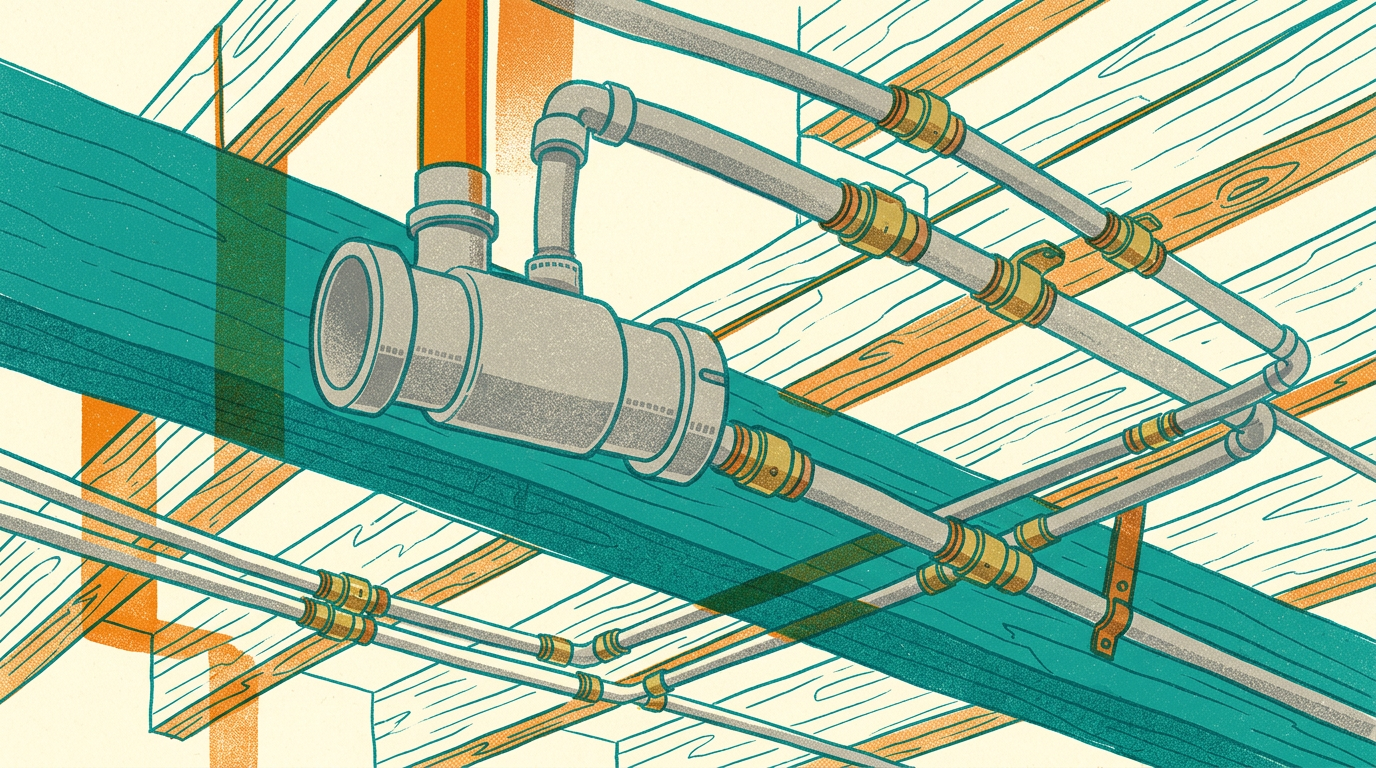
The most common visible Poly-B clue is grey flexible plastic water-supply piping, often seen in unfinished basements, mechanical rooms, ceiling joist spaces, under sinks, behind access panels or near water heaters. Other colours can exist, so colour alone should not be the only identifier.
Markings matter. Poly-B may be stamped with identifiers such as PB2110 or CSA-B 137.8. Square One notes those markings as common identifying codes, while also warning that absence of the markings does not automatically prove a pipe is not Poly-B if other features match.
An inspector may also look at fittings, crimp rings, transition points and visible repair history. Plastic fittings may be more concerning than copper or brass fittings, but even copper-fitted systems can still be Poly-B. The report should document where Poly-B was observed, where the inspection was limited and whether visible piping suggests a partial or broader installation. It should not claim that every hidden pipe was verified unless it was actually visible.
What a visual home inspection cannot confirm
Poly-B is often hidden. Finished basements, drywall ceilings, tiled showers, cabinetry, insulation, mechanical chases and renovations can all block visibility. A home inspector can identify accessible pipe and visible clues, but cannot confirm every pipe inside finished walls without invasive work.
This is one of the most important buyer-facing points. A home can show PEX in the mechanical room and still have older Poly-B serving upstairs fixtures. A renovated bathroom can have new visible supplies while original lines remain in wall cavities. A seller may honestly believe the Poly-B was replaced, but the paperwork may only show a partial repair.
The best inspection language is specific: “visible Poly-B was observed in the basement ceiling,” “plumbing materials were not fully visible due to finished areas,” or “replacement documentation should be requested.” That gives the buyer a plan without overstating the inspector’s access.
Why insurance should be checked before condition removal
Insurance is often the practical turning point. Westland Insurance explains that insurers ask about plumbing material because different pipe materials carry different water-damage risk, and polybutylene has a history of issues. MyChoice notes that some insurers may refuse to cover homes with Poly-B, while others may charge higher premiums, impose higher water-damage deductibles or limit coverage.
That does not mean every buyer will be unable to insure the home. Insurance underwriting changes by company, policy, property, age, claims history, location and replacement plans. But it does mean the buyer should not leave insurance confirmation until after condition removal.
The buyer should contact their broker or insurer with direct information: the home age, whether Poly-B was observed, whether it appears partial or widespread, whether replacement has been completed, what documentation exists and whether a replacement plan is required. A verbal “it should be fine” is weaker than a quote or underwriting confirmation.
How Poly-B affects negotiation without killing the deal
Poly-B should be handled as a decision item, not a panic button. The buyer needs to understand risk, cost, timing and insurance. The seller needs a fair chance to provide documentation. The realtor needs enough information to negotiate intelligently without turning every inspection into an emotional fight.
Reasonable outcomes can include proceeding with no change, requesting documentation, getting a replacement quote, negotiating a credit, asking for repair before possession, planning replacement during a renovation, or walking away if insurance or budget does not work. The right answer depends on the home, price, market conditions, buyer tolerance and how much Poly-B is present.
This is especially relevant in Calgary’s competitive market. A buyer may not want to lose a good home because of a manageable risk, but they also should not ignore a plumbing issue that could affect insurance or future resale. The inspection report should help sort those two extremes.
Replacement scope, permits and documentation
Poly-B replacement is not just swapping a visible pipe in a mechanical room. Whole-home replacement may require opening ceilings or walls, rerouting water lines, connecting fixtures, repairing drywall and repainting finished areas. Cost depends on access, home size, number of bathrooms, basement development, pipe layout, finish level, replacement material and whether the work is partial or complete.
Square One and MyChoice both describe replacement-cost ranges that can be broad, from a few thousand dollars into the tens of thousands depending on home size and complexity. Calgary buyers should treat any generic number as a starting point only. A quote from a qualified plumber is stronger than a rough estimate in a report.
Permit language also matters. The City of Calgary states that all plumbing and gas installations require permits, including installations for renovation work. Alberta Safety Codes Authority guidance says plumbing permits are required to install, alter or add to a plumbing system, and that homeowners or certified plumbers must obtain permits before installing, altering or adding to a plumbing system. Buyers should ask whether replacement work was permitted and inspected where required.
Calgary neighbourhood and era context
Poly-B is most relevant in Calgary homes built or renovated during the late-1970s to mid-1990s era. That can include many communities developed through the 1980s and 1990s, plus renovated older homes where supply piping was updated during that period.
Examples where buyers may be more likely to ask the Poly-B question include homes in communities such as Lake Bonavista, Midnapore, Sundance, Shawnessy, Woodbine, Douglasdale, McKenzie Lake, Signal Hill, Strathcona Park, Scenic Acres, Tuscany, Citadel, Edgemont, Hamptons, Hidden Valley, Coventry Hills, Monterey Park and similar construction eras. This is not a claim that every home in those areas has Poly-B. It is a reminder that age and renovation history should guide the inspection question.
Inner-city homes can also have Poly-B if they were substantially renovated during the relevant period. Conversely, some 1990s homes may already have had full replacement. The inspection should rely on visible evidence and documentation, not neighbourhood assumptions.
What buyers should ask before waiving conditions
Before condition removal, buyers should ask: Was Poly-B observed? Where? Is it visible in one area or multiple areas? Are there signs of leakage, staining, patch repairs or past water damage? Has any replacement been completed? Was the replacement partial or whole-home? Are there permits, invoices, photos or warranty documents? Will the insurer provide coverage as written?
If the answer is unclear, the next step may be a plumber’s review, replacement quote, insurance confirmation or document request. If the home has a finished basement or finished ceilings, the buyer should assume visibility is limited and avoid treating absence of visible Poly-B in one area as proof that none exists anywhere.
The goal is not to make the buyer afraid of the house. The goal is to prevent surprise after possession. A clear plan before condition removal is much less stressful than discovering insurance restrictions, hidden piping or replacement costs after closing.
What sellers should prepare if the home has Poly-B
Sellers can reduce friction by being organized. If Poly-B has been replaced, gather the plumber invoice, permit record, inspection record, photos, scope description, warranty information and any drywall-restoration records. If only part of the system was replaced, say that clearly. Partial replacement is not the same as whole-home replacement.
If Poly-B remains, gather any insurance information, plumbing service records, water-damage repair records, pressure-reducing valve documentation, leak history and prior inspection reports. Clear access to mechanical rooms, basement ceilings, under-sink areas and access panels where possible.
A seller does not need to apologize for a home’s era, but they should avoid vague statements such as “it was all done” unless they have documents. In a Calgary inspection, documentation can turn a buyer’s concern into a manageable planning item.
