
Why furnace lifecycle matters in Calgary
In Calgary, the furnace is not a background appliance. It is one of the most important systems in the home. Winter performance, safety, comfort, energy use, replacement cost, venting and maintenance records can all affect a buyer’s decision before condition removal.
A furnace that starts during an inspection is not automatically a healthy system. A furnace that is old is not automatically failed. The useful inspection question is: how old is it, what type is it, how is it vented, what maintenance history exists, are there visible safety concerns, and should an HVAC contractor evaluate it before the buyer waives conditions?
Calgary buyers often focus on price and square footage, but mechanical-room condition can change ownership costs quickly. A furnace near the end of service life, a poorly maintained humidifier, an aging water heater, old venting, missing service records or questionable combustion-air conditions can all become real budgeting items.
Furnace age versus furnace condition
Furnace age helps with budgeting, but it is not the same as condition. A 20-year-old furnace with good service history may be operating acceptably. A newer furnace with poor installation, blocked venting, condensate issues or lack of maintenance can still be a concern.
During inspection, the visible age may be estimated from data plates, serial numbers, seller records or installation invoices. The inspector may operate the thermostat, observe startup when conditions allow, look at filter condition, listen for unusual operation, check visible venting, observe condensate lines, review accessible ducts and comment on visible corrosion or leakage around the furnace area.
What the inspection should not do is certify the heat exchanger, measure gas pressure, complete combustion analysis, guarantee remaining service life or replace an HVAC service. If age, noise, rust, flame behaviour, venting or performance raises concern, a qualified HVAC contractor should review the system.
Venting categories buyers should understand
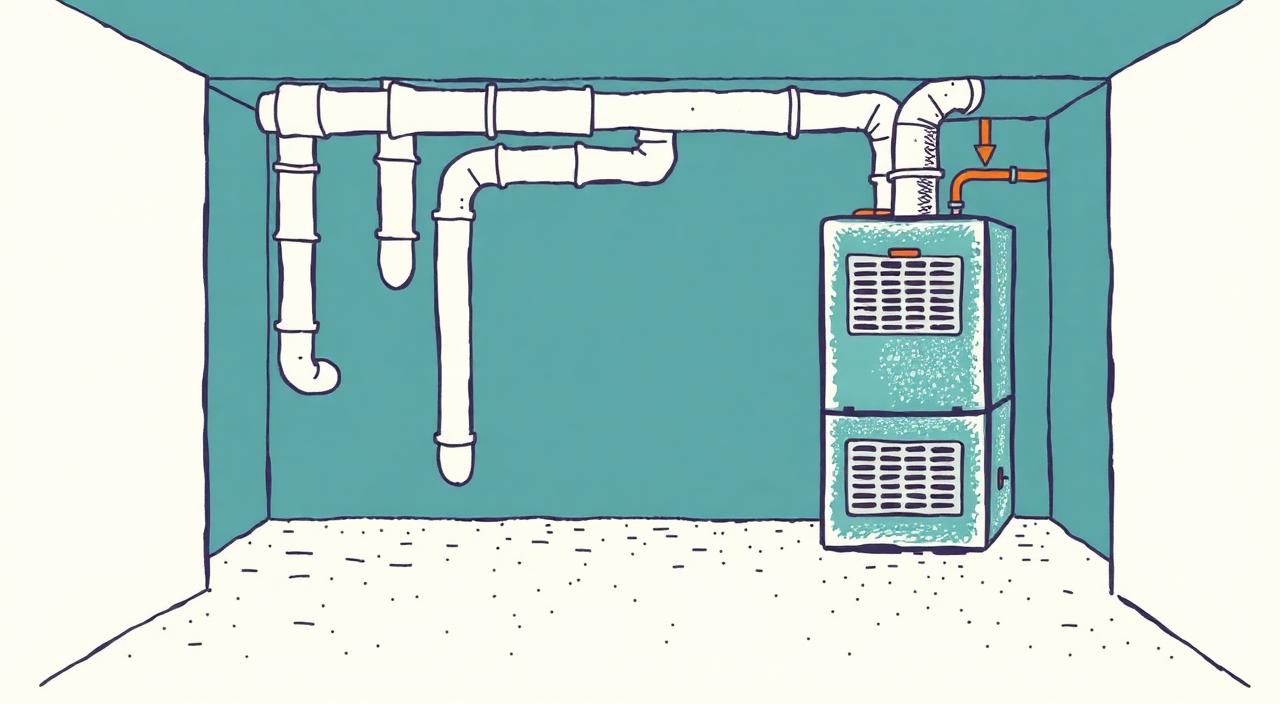
Older conventional and mid-efficiency furnaces often use metal venting and rely on chimney or atmospheric draft conditions. High-efficiency condensing furnaces usually use plastic venting and produce condensate that must be managed. That change affects exterior penetrations, slope, termination clearances, condensate drainage and potential freezing or blockage.
Natural Resources Canada describes ENERGY STAR certified gas furnaces as condensing units with high efficiency criteria. High-efficiency retrofits can be beneficial, but they are not just appliance swaps. They can change venting, drainage and intake/exhaust arrangements.
A home inspection can document visible venting type and obvious concerns such as disconnected vents, rust, back-slope, poor support, damaged plastic piping, blocked terminations, improper clearances that appear visible, condensate leaks or staining. Detailed code compliance, gas pressure, vent sizing and combustion performance require qualified HVAC or gas-fitting review.
Combustion air, depressurization and carbon monoxide
Alberta Safety Codes carbon monoxide guidance explains that fuel-burning appliances need fresh air and proper ventilation to operate properly. Without proper ventilation, heating equipment can produce carbon monoxide. It also notes that depressurization from ventilation or other exhaust devices can cause spillage of combustion products from certain combustion appliances.
This matters in Calgary homes with older furnaces, natural-draft water heaters, powerful kitchen fans, basement suites, renovated mechanical rooms, tight building envelopes or added exhaust equipment. A mechanical room that was acceptable decades ago may behave differently after renovations, new windows, air sealing or appliance changes.
A home inspection can observe visible venting, combustion-air openings, mechanical-room configuration, CO alarm presence and obvious safety concerns. It cannot simulate every depressurization condition or perform a full combustion analysis. If spillage, backdrafting, corrosion or venting concerns are visible, the report should recommend qualified HVAC or gas-fitting review.
Permits, replacements and Calgary rules
The City of Calgary states that a furnace replacement permit is issued to a qualified HVAC contractor, and its plumbing and gas permit guidance says homeowner gas permits are restricted to Alberta-certified journeyman gasfitters working on a single-family residential home. This is important for buyers reviewing replacement records.
If the seller says the furnace was replaced, ask for invoices, permit records and service documents. A high-efficiency replacement may require proper venting, condensate drainage, gas connection, electrical connections and commissioning. Documentation gives the buyer confidence that the work was not simply installed informally.
Permit records are not a substitute for inspection, and inspection is not a substitute for HVAC service. Together, they create a better picture: when installed, by whom, under what permit, and how it appears to be operating today.
Calgary housing era and furnace questions
Different Calgary homes create different furnace questions. A 1950s or 1960s bungalow may have had multiple furnace replacements, old ductwork, basement renovations and a natural-draft water heater. A 1980s or 1990s two-storey may have mid-efficiency furnace history, aging humidifiers and original venting transitions. A newer home may have a high-efficiency furnace, HRV, tightly sealed envelope and condensate drain considerations.
Inner-city infills can have complex mechanical rooms, multiple furnaces, zone systems, air conditioning and tight clearances. Luxury and acreage homes may have boilers, in-floor heat, multiple furnaces, garage heaters and specialty controls. Townhomes and condos may involve ownership-responsibility questions or shared components.
The inspection should match the property. A furnace comment in a small bungalow should not read the same as a mechanical-room review in a 5,000-square-foot estate home.
Humidifiers, filters and homeowner maintenance
Furnace performance is often affected by simple maintenance. Dirty filters, disconnected humidifiers, leaking humidifier pads, closed dampers, poor access, blocked returns, stored items around the furnace and neglected service can all show up during inspection. None of these automatically mean the furnace is failing, but they help tell the maintenance story.
Humidifiers deserve special attention in Calgary because winter dryness often leads homeowners to run them aggressively. Too much indoor humidity can contribute to window condensation and attic frost. Too little maintenance can lead to leaks, scale buildup and poor operation.
A buyer should ask when the furnace was last serviced, whether the filter is changed regularly, whether the humidifier works, whether air conditioning was added, and whether any rooms have comfort complaints. These are practical ownership questions, not just inspection report details.
What buyers should ask before condition removal
Before condition removal, buyers should ask: How old is the furnace? When was it last serviced? Are there invoices? Was replacement permitted? What type of venting is visible? Are there any signs of corrosion, condensate leakage, backdrafting, unusual noise or poor access? Are CO alarms present? Is the mechanical room modified? Are there other fuel-burning appliances or an attached garage?
If the furnace is old, noisy, poorly documented or visibly concerning, an HVAC contractor should evaluate it before the buyer makes a final decision. If replacement is likely, get a quote. If venting or gas work appears questionable, do not rely on guesses.
The purpose of the inspection is not to certify the furnace forever. It is to help the buyer understand whether the system appears serviceable, needs maintenance, needs specialist review or should be treated as a near-term replacement item.
What sellers should prepare
Sellers can make furnace findings much easier by preparing service invoices, installation records, permit information, warranty paperwork, filter records, humidifier service, air-conditioning installation records and any HVAC repair documents. Clear access to the furnace, filter, humidifier, venting, condensate drain and surrounding mechanical room helps the inspection stay specific.
If the furnace is older, service records matter. If the furnace is newer, permit and installation records matter. If there are multiple furnaces, boilers or garage heaters, label and document what each system serves.
A buyer does not need a brand-new furnace in every home. They need to know what they are buying, how it is vented, how it has been maintained and whether qualified follow-up is needed before they remove conditions.
How to read furnace comments in the report
Furnace comments should be read as a combination of condition, age, safety and budgeting. A report comment that says the furnace is older is not the same as saying it has failed. A report comment about venting or combustion air deserves more urgency because it may relate to safety or installation quality rather than simple age.
Buyers should look for the difference between maintenance, service and replacement language. A dirty filter, neglected humidifier or missing service record may be a maintenance item. Corrosion around venting, unusual flame observations, condensate leakage, poor vent support, visible backdrafting clues or blocked terminations may justify HVAC follow-up before condition removal. An old but functioning furnace may simply require budgeting and service.
The strongest next step is to ask an HVAC contractor a focused question. Do not ask only “is the furnace okay?” Ask: what is its age, condition, venting type, expected service needs, replacement cost, and whether any safety or permit issues should be addressed before possession.
