
Why attic frost confuses Calgary buyers
Attic frost is one of the most misunderstood findings in Calgary home inspections. A buyer sees dark sheathing, damp insulation or ceiling staining and naturally thinks “roof leak.” Sometimes that is correct. But in Calgary, attic frost and attic rain can mimic a roof leak, especially after a cold stretch followed by a chinook or warm sunny day.
The difference matters because the repair path is different. A roof leak may need shingles, flashing, vents, skylight work or roof penetration repair. Attic frost usually points toward air leakage, moisture movement from the house, ventilation imbalance, bathroom fan issues, insulation gaps or attic access leakage. If the diagnosis is wrong, the homeowner may spend money in the wrong place.
A calm inspection report should compare patterns. Where is the staining? Is it under a roof penetration or spread across cold sheathing? Are nails frosted? Is insulation wet below one point or broadly damp? Do bathroom fans terminate properly? Are soffits blocked? Is the attic hatch sealed? What was the weather before the inspection?
How attic frost forms
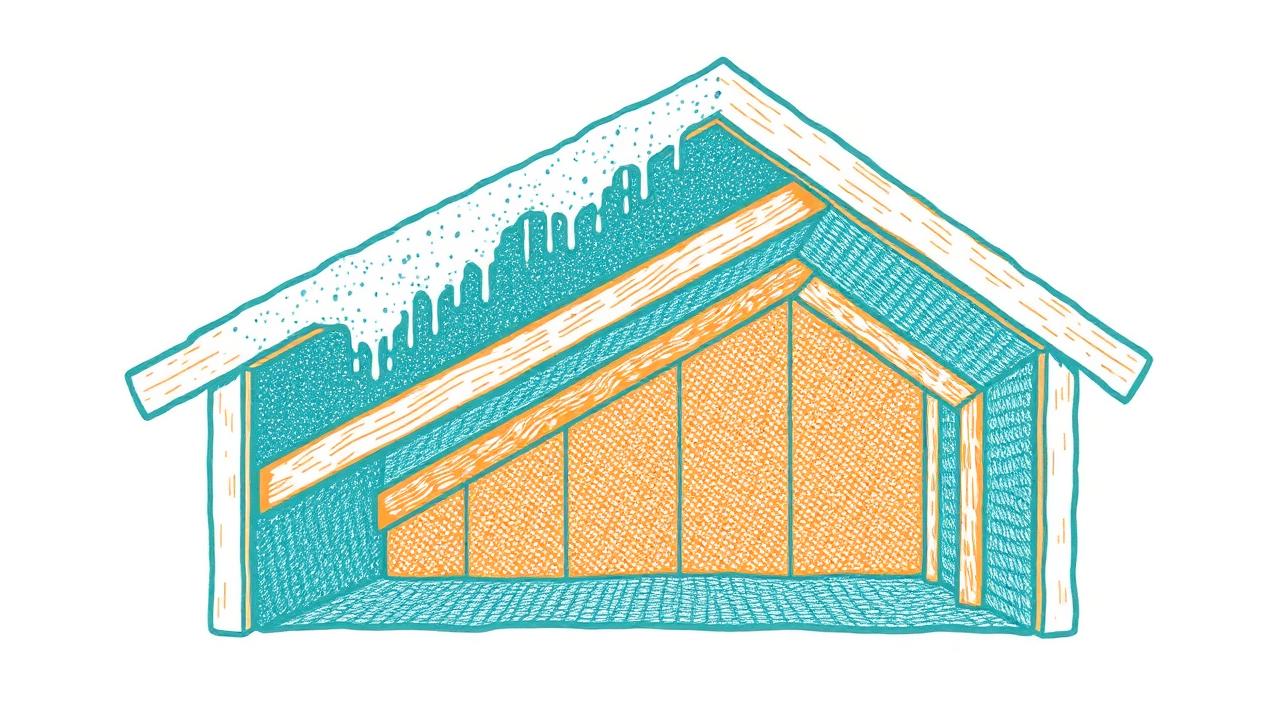
Natural Resources Canada explains that after air sealing, attic ventilation is the second line of defence against water vapour that gets into the attic. Warm indoor air carries moisture. When that air leaks into a cold attic, moisture can condense or freeze on roof sheathing, nails, trusses and other cold surfaces.
CMHC’s attic moisture guidance explains that attic condensation and ice damming are related and can both be caused by warm, moist air leaving the house and entering the attic. The same CMHC guide notes that an inspection may find that leakage is not the problem because the attic may be dripping with condensation or covered with frost.
In Calgary, this often becomes obvious during winter and shoulder seasons. Long cold periods can allow frost to accumulate. A chinook, sunny day or rapid thaw can melt that frost faster than the attic can dry. That meltwater is sometimes called attic rain. It can drip onto insulation or ceilings and look like an active roof leak.
How roof leaks usually show up differently
Roof leaks tend to follow water-entry paths from above. Common locations include plumbing stacks, roof vents, exhaust vents, chimneys, skylights, valleys, step flashing, wall-roof intersections, damaged shingles, low-slope transitions, ice-dam areas and roof penetrations.
A roof leak pattern may be more localized than attic frost. Water staining may appear below one penetration, along a valley, near a chimney or close to a flashing detail. In a recent hail or wind event, damaged shingles, lifted tabs, missing vents or compromised flashing may align with the wet area.
But there are exceptions. Wind-driven snow can enter some vents. Condensation can form near penetrations. Older roof stains can be dry and historical. A buyer should not assume every stain equals a current leak, and the inspector should not overstate certainty when weather and access limit the conclusion.
The Calgary weather factor
Calgary’s weather makes attic diagnosis more complicated. Cold snaps, chinooks, fog, heavy snow, wind, hail and quick temperature swings can all change attic conditions. A roof that looks dry in July may show frost problems in January. An attic that looks alarming after a thaw may not show active dripping a week later.
This is why timing should be included in the inspection story. Was there recent snow? A chinook? Fog? Wind-driven snow? Heavy rain? Hail? A sudden thaw? Did the seller run high indoor humidity? Was the humidifier set too high? Were bath fans used? Were attic accesses sealed?
The inspection should translate weather into due diligence. If the attic was frosted during inspection, the report should recommend monitoring, moisture-source control, air sealing and specialist review as needed. If the roof covering also shows damage, roofing follow-up may be needed too.
Bathroom fans, attic hatches and air leaks
Many attic moisture issues come from air leakage rather than roof failure. Bathroom fans that vent into the attic instead of outdoors, disconnected ducts, unsealed attic hatches, pot lights, plumbing stacks, wiring penetrations, ceiling changes and gaps around chimneys can all move warm humid air into a cold attic.
Natural Resources Canada emphasizes air sealing as the first line of defence. Ventilation helps, but ventilation alone is not a cure if the attic is being fed warm moist air from the living space. That is why simply adding more vents may not solve the real problem.
During inspection, the visible clues can include frost around nails, staining near bath-fan ducts, compressed insulation near the hatch, missing weatherstripping, bath fan ducting that is disconnected or uninsulated, and blocked soffit ventilation. The repair may require insulation and air-sealing contractors, not just a roofer.
Attic ventilation and insulation clues
Attic ventilation should allow cold outside air to enter through intake vents and exit through roof or ridge vents. If soffits are blocked by insulation, baffles are missing, exhaust vents are inadequate or roof ventilation is poorly balanced, the attic may not dry properly.
Insulation also matters. Uneven insulation can create warm spots. Gaps around ceiling penetrations can leak air. Over-insulating without air sealing can bury leaks rather than fix them. Bathroom fan ducts that are uninsulated can condense and drip. Exhaust fans that terminate inside the attic add moisture directly to the space.
A home inspection can identify visible ventilation and insulation clues. It should not claim to design the full remediation plan. When the pattern is significant, the buyer may need roofing, insulation or building-envelope specialists to confirm the best fix.
What buyers should ask before condition removal
Before condition removal, buyers should ask: Is the attic staining localized or widespread? Was active moisture observed? Is the roof covering damaged? Are bath fans properly vented outdoors? Is the attic hatch sealed? Are soffits blocked? Is insulation disturbed or compressed? Are there signs of historical repairs? Was the humidifier setting high? Has the seller had attic frost or attic rain before?
If the report identifies possible attic frost, the buyer should ask for specialist review when the severity or cost matters. If the report identifies a probable roof leak, a roofing quote may be needed. If both patterns are present, both roof and attic performance should be reviewed.
The goal is not to exaggerate the finding. Many attic moisture issues can be corrected. The key is matching the fix to the cause before the buyer inherits the problem.
What sellers can do before listing
Sellers can reduce uncertainty by making the attic accessible, providing roof repair records, documenting bath fan repairs, showing insulation or ventilation upgrades, and disclosing known attic frost, attic rain or leak history. If the humidifier is set high during winter, reducing indoor humidity may help limit frost accumulation, but it is not a substitute for repairing air leaks or fan problems.
Before inspection, clear access to attic hatches, mechanical rooms and any areas where bathroom fan ducts or roof penetrations may be visible. If repairs were completed, keep invoices and photos available. A buyer does not need a perfect attic. They need a clear story: what happened, what was repaired and what remains to monitor.
The strongest inspection result is not “no comment.” It is a report that explains visible conditions, scope limits and next steps without confusing frost, condensation and roof leakage into one vague moisture finding.
How inspection photos should be interpreted
Attic photos can look dramatic, especially when there is black staining, frost on nail tips or damp-looking sheathing. Buyers should read those photos with the written comments, not in isolation. A close-up of stained sheathing may not show whether the staining is under a vent, spread across the roof deck, connected to bathroom fan discharge or historically dry.
The best inspection photos usually include both detail and context. A close-up of staining should be paired with a wider photo showing the location in the attic. A frosted nail pattern should be explained as a condensation clue, not automatically a roof leak. A localized wet area near a plumbing stack should be compared with the exterior roof condition and flashing. A bath fan duct should be shown where it terminates, not just where it starts.
For Calgary buyers, this prevents overreaction. An attic can look rough in one area but be manageable with air sealing and fan repair. Another attic can look only mildly stained but have a clear roof penetration leak. The written explanation is what turns photos into useful decision-making evidence.
