
Why spring matters in Calgary
The freeze-thaw cycle from October through April leaves measurable damage on almost every home: lifted shingles, hairline stucco cracks, settled grade against the foundation, packed debris in eavestroughs from late-fall leaf drop. Catching these in March or April is a $0–$500 fix; catching them in July after the first hail or heavy rain is often a $5,000+ insurance claim.
Roof check from the ground
Use binoculars from ground level. Look for missing, lifted, or curled shingles, exposed nails at ridge caps, and damaged flashings around vents and chimneys. Calgary's late-season Chinook winds routinely lift shingles on south- and west-facing slopes. Granule loss collecting in downspouts means the asphalt mat is breaking down — note the roof age and start budgeting for replacement.
Drainage and grading
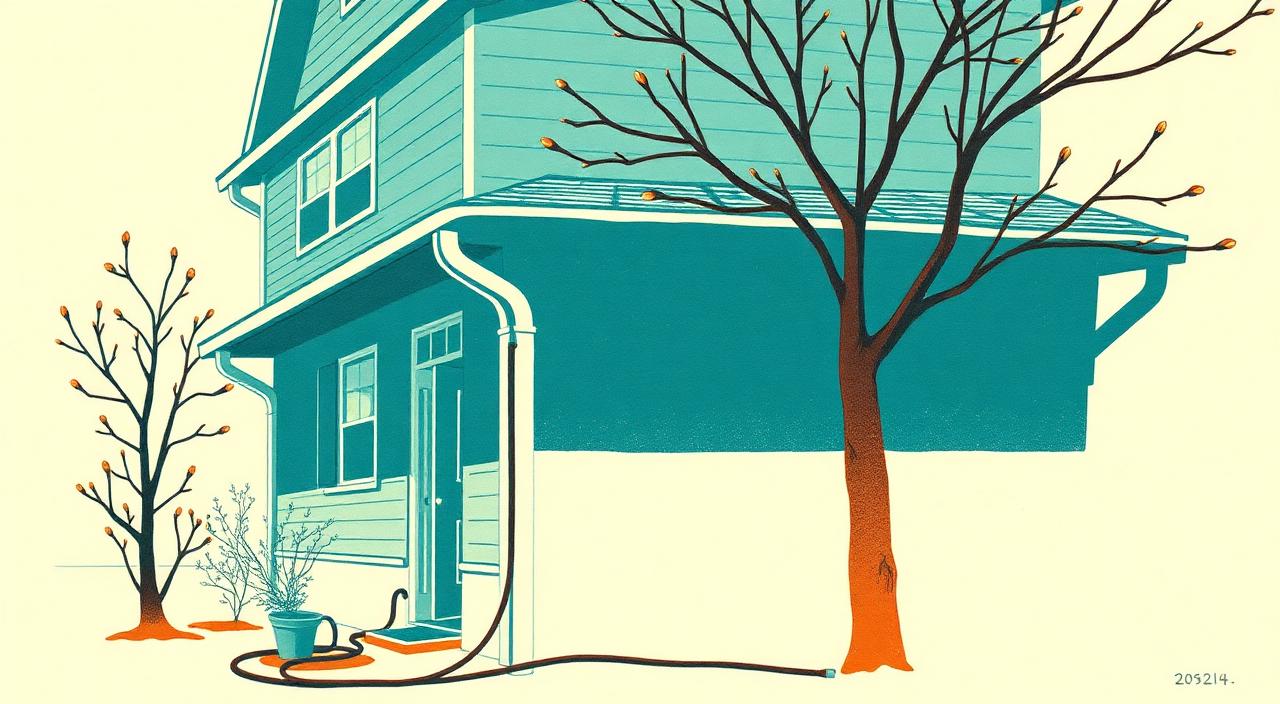
Clear all eaves and downspouts, then run a hose for two minutes and watch where water goes. Downspout extensions should discharge a minimum of 1.8 metres (six feet) from the foundation. Re-grade any spots where soil settled — Calgary clay slumps every winter and you want a positive slope of roughly 150 mm over the first 1.8 metres.
Mechanical systems
Replace the furnace filter, vacuum cold-air return grilles, and book A/C service before peak demand in late June. Test smoke and CO alarms; replace any unit older than ten years. Open the humidifier bypass damper for summer. Flush the hot water tank if it's more than two years old — Calgary hard water leaves significant sediment.
Exterior envelope
Walk the perimeter looking for stucco cracks wider than a credit card edge, separated caulking at window and door perimeters, and damaged weatherstripping. Re-caulk with high-quality polyurethane or hybrid sealant — silicone alone fails fast in Calgary's UV. Check the deck ledger board attachment and any exposed framing for rot.
Basement walk after first heavy rain
Walk the basement with a flashlight after the first heavy spring rain. Look at floor-wall joints, around window wells, and at plumbing penetrations. Efflorescence (white salt staining) means moisture is moving through the wall — not necessarily an emergency, but worth tracking. Photograph anything you find with the date so you have a baseline.
