
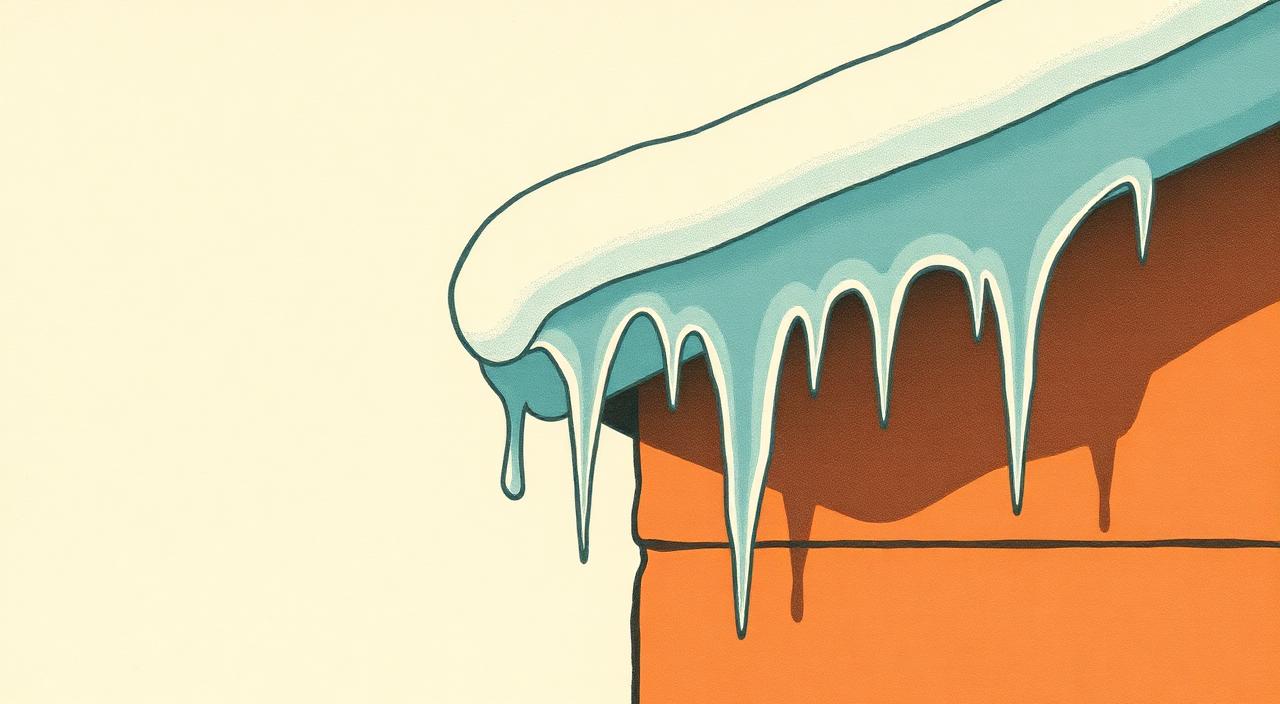
The melt-refreeze mechanism
Heat escapes from the conditioned interior into the attic, warming the underside of the roof sheathing. Snow on the upper roof melts. The meltwater runs down to the cold eave overhang (which extends past the heated envelope), refreezes, and builds an ice dam. Subsequent meltwater pools behind the dam and is forced back under shingles.
Why Calgary makes it worse
Chinook winds drive melt cycles even mid-winter. Multiple freeze-thaw cycles per month accelerate dam growth and damage compared to consistently cold climates. Shallow roof pitches common in some Calgary suburbs also concentrate water.
Order of operations to fix
Air-seal the ceiling plane first — every bypass closed reduces heat reaching the attic. Then top up insulation to current levels (R-50 to R-60 for Calgary). Then verify ventilation balance (intake at soffits, exhaust at ridge). Heat cables are a last resort that mask the underlying issue.
Why heat cables aren't a real fix
Heat cables prevent ice formation in the immediate strip they cover but don't address heat loss into the attic. They consume electricity continuously through winter, fail every few years, and don't prevent the broader damage of warm attics (frost, shortened shingle life, summer cooling load).
What inspection documents
Visible ice damming, evidence of past damming (staining at eaves, shingle wear patterns, interior staining), insulation levels, attic bypasses, ventilation balance, and any installed heat cable systems. Recommendations sequence the fixes from root-cause to symptom-management.
Spring damage you might not notice yet
Stained ceilings, soaked insulation that lost R-value, sheathing rot, and ice-damaged eaves. If you saw icicles last winter, plan an inspection to assess any hidden damage before next heating season.
