
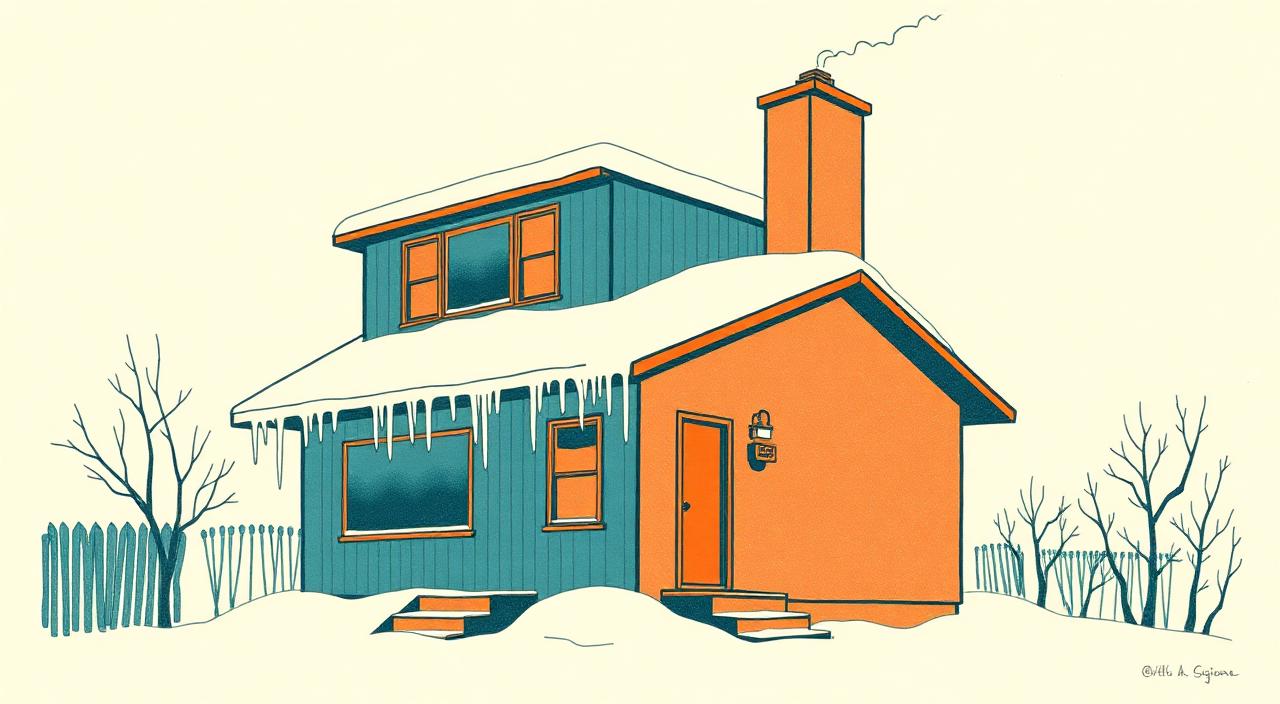
What winter limits
Snow cover limits visual evaluation of the roof — the inspector documents what is accessible, uses the eaves and attic for inference, and notes the limitation. Frozen ground prevents detailed grading and drainage assessment. Air conditioners can't be operated below roughly 15°C without risking compressor damage; operation is deferred or the unit is documented visually only.
What winter reveals
Ice damming on roof eaves, attic frost from interior air leakage, drafty windows and weatherstripping failures, condensation on glazing and sills, furnace performance under real load, humidifier balance, exhaust vent blockage from snow, and any envelope point where heat is leaking. Many of these are invisible in summer.
Pre-inspection prep in winter
Confirm utilities are live and the heat is set to a normal occupied temperature for at least 24 hours before the inspection. Driveways and walkways should be cleared. Attic hatches and mechanical rooms need clear access. If snow can be cleared from the area immediately around the foundation, do so — it improves grading observation.
How limitations should be handled in the report
Every winter limitation should be explicitly named in the report — what couldn't be evaluated, why, and a recommendation for follow-up after thaw if relevant. A report that doesn't disclose winter limitations is incomplete; a report that uses limitations as an excuse to skip evaluation is worse.
Should I delay until spring?
Generally no. Calgary's market doesn't pause for winter, and waiting often means losing the deal or paying a higher spring price. Inspect now, accept the documented limitations, and follow up on any deferred items after thaw if needed.
