
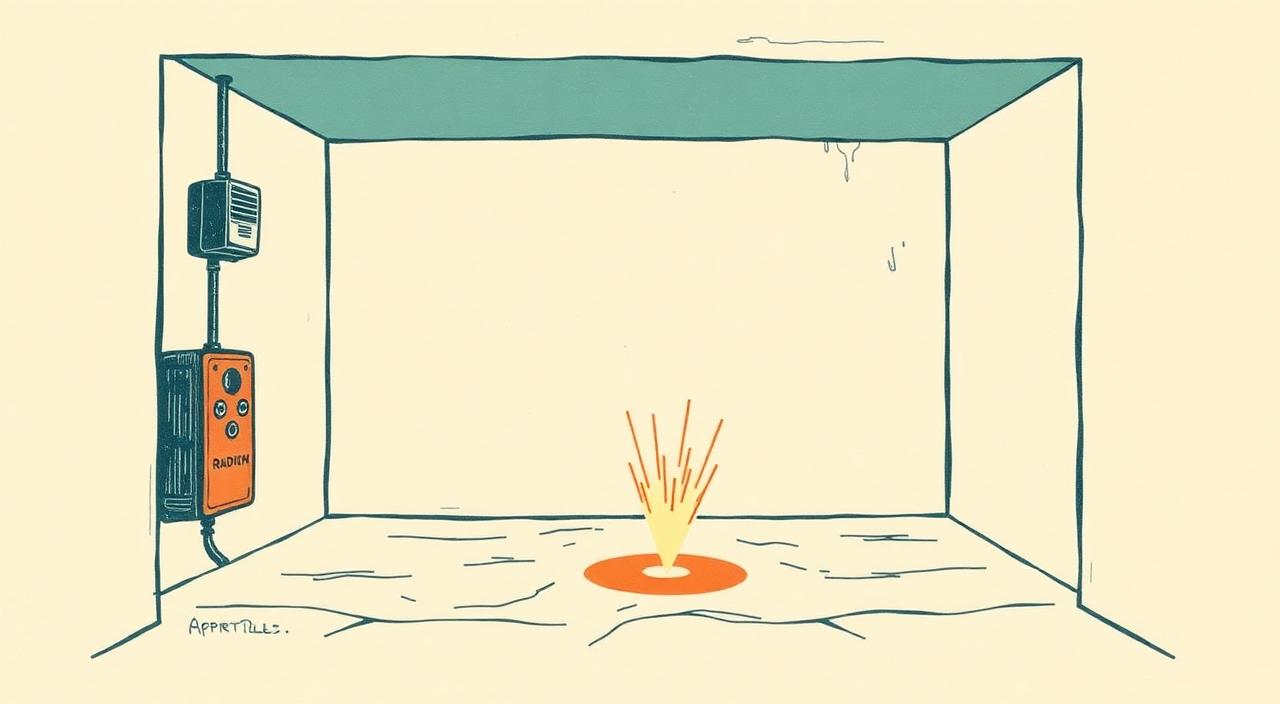
Radon is a naturally occurring radioactive gas produced by the decay of uranium in soil and rock. It enters homes through foundation cracks, sump openings, and any pathway between soil gas and interior air. Long-term exposure at elevated concentrations is the second-leading cause of lung cancer in Canada after smoking, according to Health Canada. Calgary sits in a region of moderate to elevated radon potential, and testing is the only way to know an individual home's level.
Health Canada's guideline is 200 Bq/m³ for the annual average concentration in normal living areas. Above that level, mitigation is recommended within two years; above 600 Bq/m³ within one year. Mitigation in Calgary typically costs $2,500 to $4,500 for a sub-slab depressurization system and reliably reduces concentrations to well below the guideline.
Testing reliability depends on duration. Short-term tests (3 to 7 days) are useful as screening but vary significantly with weather, ventilation, and occupant behaviour. Long-term tests (90 days minimum, ideally during the heating season when homes are tightly closed) are the standard for actionable results. Health Canada explicitly recommends long-term testing for decision-making.
For buyers with limited time during a condition window, two practical approaches exist. First, ask the seller whether they have any prior test results — many Calgary homes have been tested. Second, factor radon into the offer with the understanding that long-term testing will follow occupation and that mitigation, if needed, is a known cost.
For homeowners, a long-term test kit ordered through the Take Action on Radon program or a Canadian-National Radon Proficiency Program (C-NRPP) certified provider runs roughly $40 to $80, and provides a reliable baseline. Re-testing is recommended every few years and after major renovations that change a basement's air pressure dynamics (HRV installation, basement development, foundation work).
During inspection, the inspector documents whether the home has been tested, any visible radon mitigation system, and any foundation features that affect radon entry potential (unsealed sump, exposed dirt crawl space, significant foundation cracks). Radon testing itself is typically a separate service rather than part of a standard inspection.
