
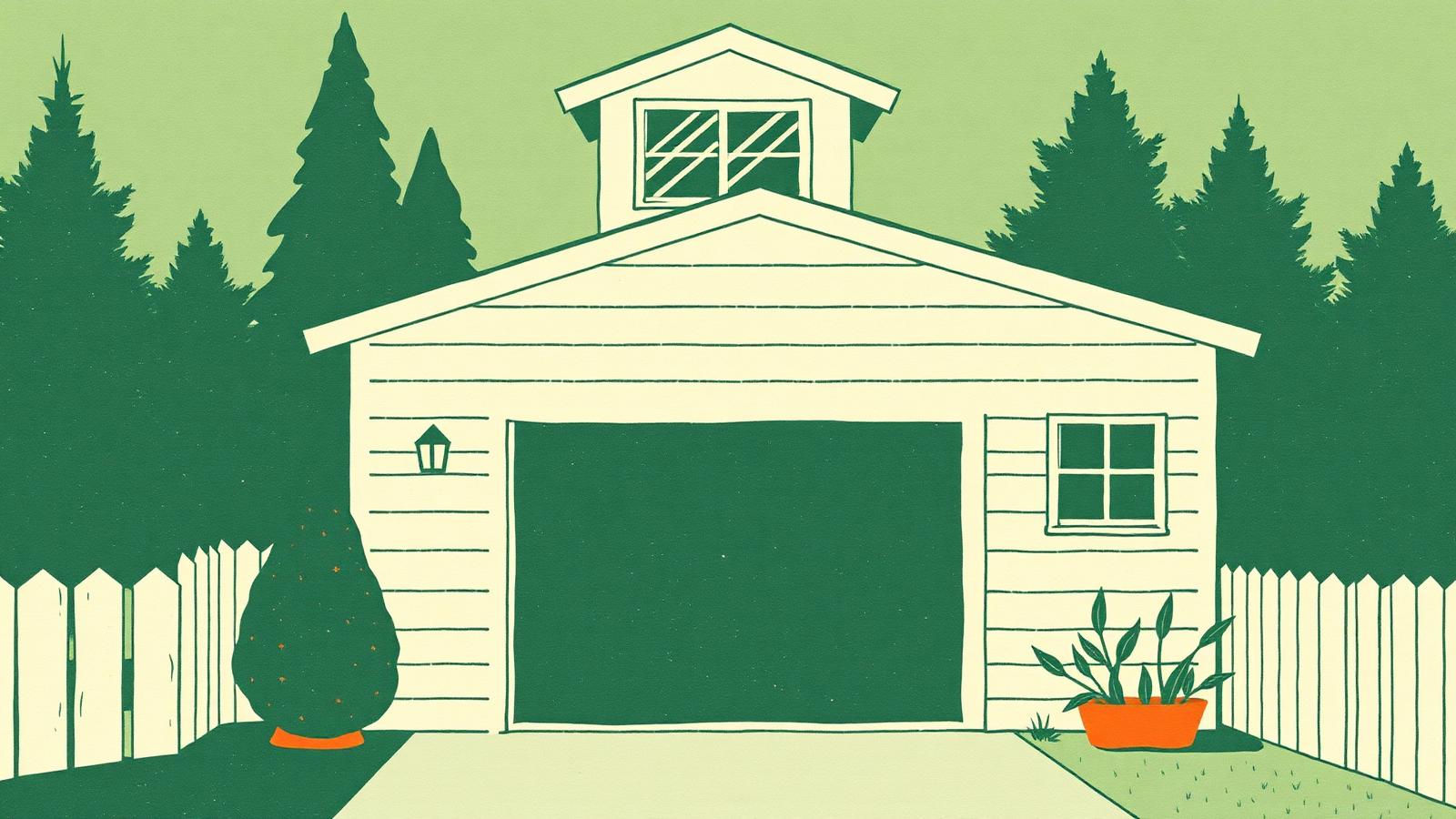
The structure everyone tours and nobody inspects
In Calgary's established communities — Bridgeland, Renfrew, Killarney, Bowness, Inglewood, Altadore — the detached garage off the lane is a defining feature. It is also frequently the oldest, least maintained and least documented structure on the property.
Buyers walk through it in ninety seconds. Inspectors spend real time in there, because a garage bundles together structure, roofing, electrical, sometimes gas, and increasingly, living space above.
Slab, foundation and movement
Many older Calgary garage slabs were poured thin, on minimal base preparation, with no reinforcement. Cracking, differential settlement, a slab sloping toward the back wall and separation at the perimeter are common. Most of it is cosmetic or serviceability rather than structural.
What matters more is whether the walls are still plumb, whether the header over the overhead door is sagging, whether the structure has racked, and whether water flows in through the door opening because the apron slopes the wrong way. An inspector documents movement, out-of-square door openings, cracked or spalled concrete, and any evidence of settlement affecting the framing above.
Overhead doors and opener safety
Two safety items get checked every time. First, the automatic reverse: the door should stop and reverse on contact with an obstruction. Second, photo-eye sensors near the floor should stop and reverse the door when the beam is broken. Missing sensors, sensors mounted too high, or sensors pointed at each other on the same side are all findings.
Beyond safety, the inspector looks at spring condition and containment, cable condition, track alignment and fastening, panel damage from hail or impact, weatherstripping and the manual release. Torsion spring work is dangerous and belongs to a door contractor — inspectors document, they do not adjust.
Electrical: the most common garage finding
Detached garages need power fed from the house, and that feed is where corners get cut. Common findings include cable buried at insufficient depth or without mechanical protection, indoor-rated cable used underground, subpanels without a proper grounding arrangement for a separate structure, missing disconnects, open junction boxes, unprotected splices, and receptacles without GFCI protection where required.
Extension cords run permanently from the house to the garage show up more often than you would expect. So do welder circuits, hot tubs, EV chargers and shop equipment added over the years without documentation.
All of this is reported as observed condition with a recommendation for licensed electrician review where safety concerns exist. Inspectors do not open panels beyond removing an accessible cover, and they do not perform load calculations.
Heaters, gas lines and gas-proofing
Heated garages are popular in Calgary. A suspended unit heater needs adequate clearances from combustibles, secure hanging, proper venting and a gas connection completed by a qualified gasfitter. Radiant tube heaters have their own clearance rules. Portable propane heaters stored inside are a red flag worth noting for the buyer's awareness.
Where habitable space exists above a garage — a garden suite, an office, a studio — separation between the garage and that space matters. Vehicle exhaust and stored fuels must not migrate into living space, which means the ceiling assembly, penetrations, door assemblies and any duct passing through need to remain intact. Renovations that punch pot lights, ducts or attic hatches through that assembly compromise it.
Inspectors document visible conditions and penetrations. Verification of assembly ratings and gas work is a permit and qualified-trade matter.
Garage suites, laneway homes and legality
Calgary has actively supported secondary and backyard suites, and many are excellent. Many others were finished without permits. The visual quality of the finish says nothing about whether the suite was approved, inspected, or built with the required egress, separation, ventilation, smoke and carbon monoxide alarms, and parking.
A home inspection describes the accessible physical condition of the space. It does not confirm legal status. Buyers should verify suite registration and permit history with the City of Calgary and confirm with their insurer and lender how an unpermitted suite affects coverage and financing.
If income from a suite is part of your purchase math, treat legality verification as a separate condition alongside the inspection.
Roof, envelope and the maintenance backlog
Garage roofs are often on a different replacement clock than the house, and they take the same hail Calgary is known for. Missing shingles, exposed fasteners, no drip edge, absent or damaged eavestrough, rotted fascia, and siding in ground contact are typical findings.
Because nobody lives in the garage, leaks go unnoticed for years. Water staining on the underside of sheathing, sagging between rafters, and rot at the bottom of wall studs where siding meets grade all get documented — and they are usually the cheapest problems on the property to fix early.
