
Why cooling is now a real Calgary inspection topic
Calgary spent decades as a market where air conditioning was optional. That has changed. Smoke seasons, hotter July stretches and infill homes with large south-facing glazing have pushed central air, heat pumps and ductless mini-splits into the mainstream — including retrofits into 1960s bungalows that were never designed for them.
That matters at inspection because retrofit cooling introduces new questions: was the electrical capacity adequate, is the condenser sited with proper clearance, is the line set protected and insulated, is condensate being drained somewhere sensible, and was the existing duct system ever balanced for cooling airflow?
The temperature rule, explained plainly
Compressors are lubricated by oil that circulates with refrigerant. Running a standard air conditioner when it is cold outside can slug the compressor with liquid refrigerant and cause damage the buyer would then own. For that reason most inspectors follow the industry convention of only operating cooling when outdoor temperatures have been consistently above roughly 15–18°C.
In Calgary that rules out a large part of the year. If cooling is important to your purchase, three practical options exist: schedule the inspection during a warm stretch, ask the seller for service records and installation invoices, or arrange an HVAC contractor evaluation as a separate condition.
A report that says cooling was not operated due to outdoor temperature is not the inspector avoiding work. It is protecting equipment you are about to buy.
What the inspector actually checks when the system can run
With warm weather, the inspector will call for cooling at the thermostat, let the system stabilize, and measure supply and return air temperatures. A split in the range of roughly 8–12°C suggests the system is moving heat. A weak split can indicate low charge, dirty coils, restricted airflow or a failing compressor — all of which get referred to an HVAC contractor rather than diagnosed on site.
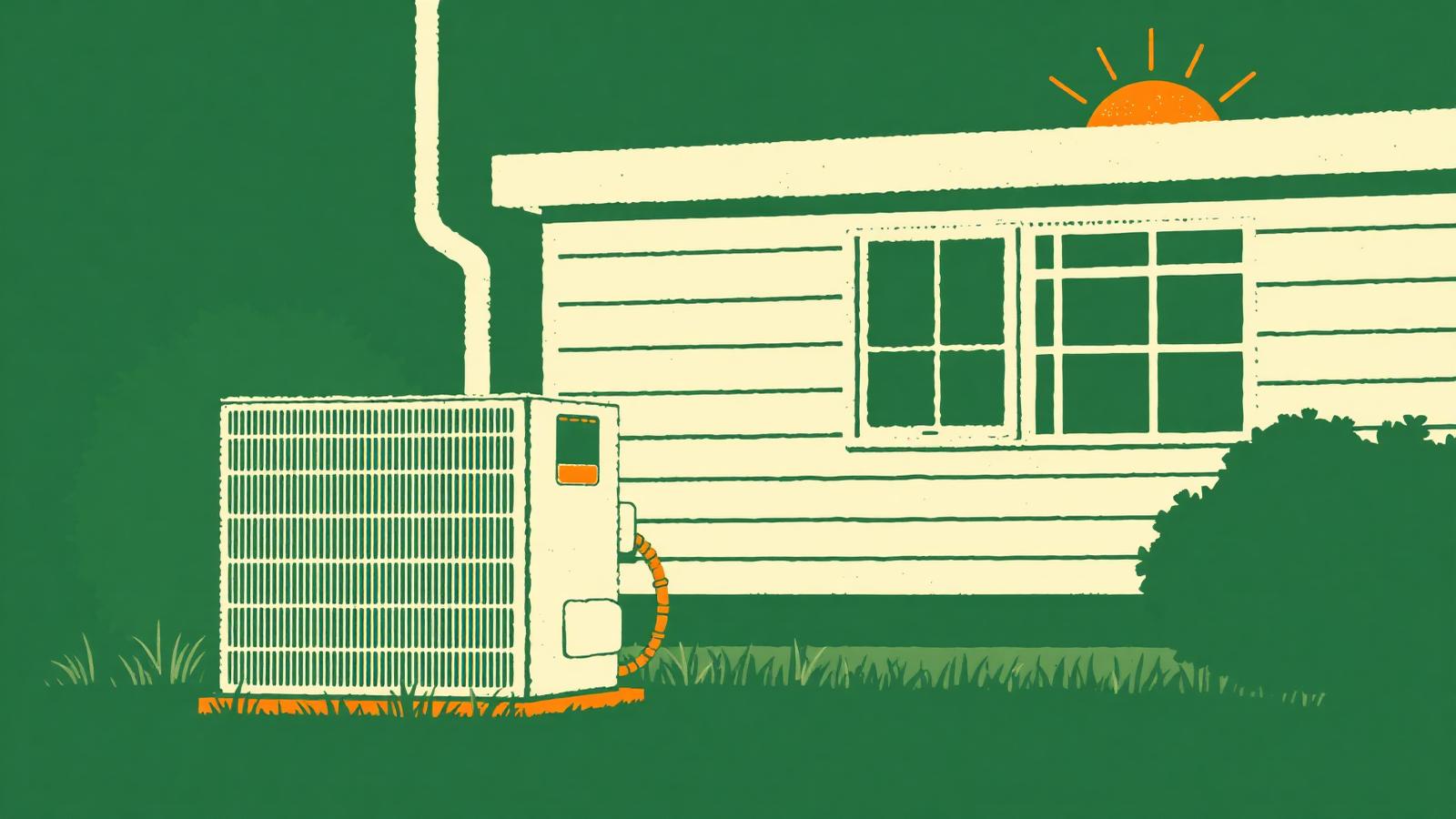
Outside, the inspector looks at the condenser: manufacturer date, level pad, clearance from fences and shrubs, fin damage, hail impact, refrigerant line insulation, disconnect presence and condition, and any obvious oil staining that hints at a leak. Inside, the evaporator coil is usually enclosed and not visible, so condensate drainage, drain pan condition, secondary pan and any staining near the plenum become the accessible clues.
Hail, fins and the Calgary condenser problem
Calgary sits in one of the most hail-exposed corridors in Canada. Condensers take direct hits. Flattened fins reduce airflow across the coil, which reduces capacity and raises head pressure and run time. It rarely stops the unit outright, so it can go unnoticed for years.
During inspection, visible fin damage, dented cabinets and bent guards get documented. Fin combing and cleaning are inexpensive; a compressor that has been running hot for five summers is not. If the neighbourhood took a notable hail event and the condenser is original, ask whether an insurance claim was filed and what it covered — many roof claims also include mechanical equipment.
Age, refrigerant type and replacement budgeting
A condenser data plate usually gives a manufacture date and refrigerant type. Systems charged with R-22 are legacy equipment — production of that refrigerant has been phased out under the Montreal Protocol, and repairs depend on reclaimed supply at high cost. When a buyer sees R-22 on the plate, the practical read is that a significant repair likely becomes a replacement conversation.
Newer systems use R-410A and, increasingly, lower-GWP replacements. None of that makes an older unit defective today. It changes the budgeting picture: a 16-year-old R-22 condenser is a plan-for-it item, not necessarily a negotiate-it item.
Heat pumps and mini-splits: extra items to look at
Cold-climate heat pumps and ductless mini-splits are showing up in Calgary retrofits, secondary suites, garage offices and infills. They add a few inspection considerations. Both heating and cooling modes should be exercised when temperature allows. Indoor heads need condensate drainage that does not simply discharge against siding or into a wall cavity. Line-set penetrations should be sealed and flashed. Outdoor units on cold-climate systems should be elevated above expected snow depth with a defrost drain path.
Where a heat pump is the primary heat source, ask what the backup strategy is at −30°C. That is a design question the seller's installer should be able to answer in writing.
What an inspection does not cover
A home inspection is a visual, non-invasive review of accessible components. It does not include refrigerant charge measurement, leak detection, superheat and subcooling readings, coil cleaning, electrical load calculations or manufacturer warranty verification. Those are HVAC contractor services.
If the report flags weak cooling, poor split, hail damage, suspect installation or an aging R-22 system, treat that as the trigger for a contractor evaluation before conditions come off — not as a completed diagnosis.
